When reading an upholstery specification sheet, you often come across words that seem to belong to a different language: Martindale, warp, weft, pilling, full-grain leather. These are technical terms, sometimes even fascinating ones, but they are rarely explained clearly at the time of purchase. That is why we have brought together the most useful upholstery fabric terms in a single glossary.
Understanding them is not just for industry professionals. It means choosing a sofa or bed knowing exactly what you are bringing into your home, how long it is likely to last, and how it will perform in everyday life. In this guide, you will discover:
- how a fabric is made and what warp and weft reveal about it;
- how the durability of an upholstery fabric is measured;
- the differences between terms such as stain-resistant, pet-friendly and antimicrobial;
- how to recognise the main fabric families, from velvet to chenille;
- the vocabulary of leather, from full-grain to nubuck;
- a quick guide to the most common decorative textures.
How a fabric is made: warp and weft
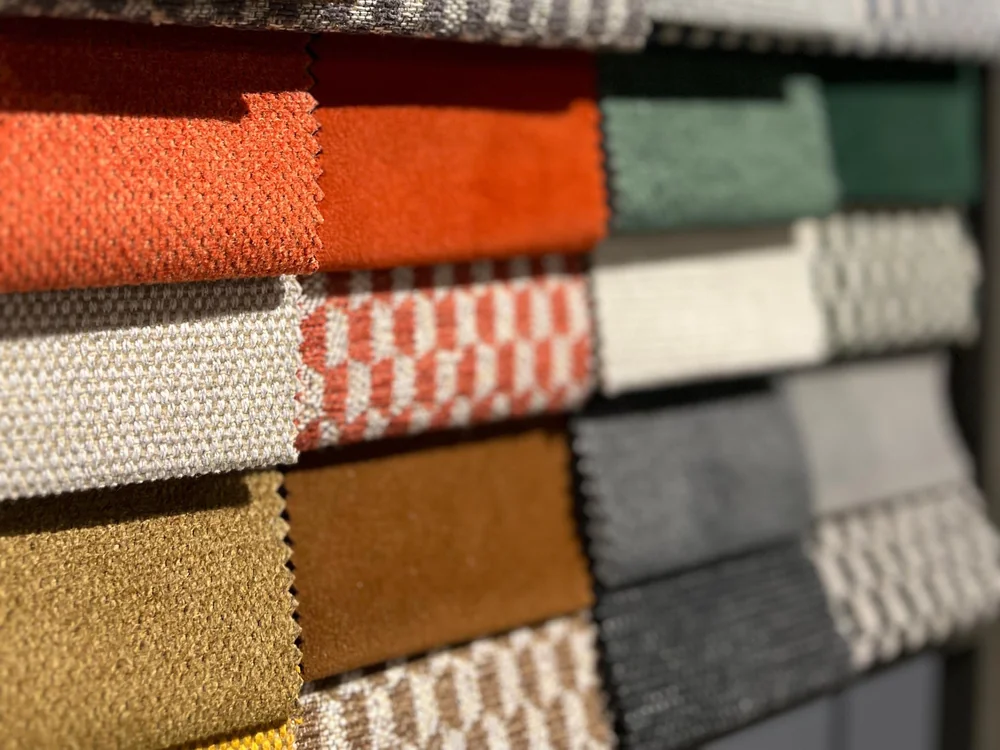
Every fabric is created through the combination of yarns and a specific construction technique. In woven fabrics, for example, the structure is formed by the interlacing of the warp, which consists of the yarns arranged lengthwise on the loom, and the weft, which consists of the yarns woven across them. Alongside fibre composition and yarn characteristics, the fabric’s structure and weight also contribute to determining its hand feel, texture, elasticity and durability. Its tendency to retain dust and dirt, on the other hand, depends on factors such as the surface structure, the presence of a pile, and any special treatments applied to the fabric.
This is not simply a weaving lesson. Understanding these fundamentals helps make sense of many of the other terms found in technical specifications, from abrasion resistance to decorative surface effects.
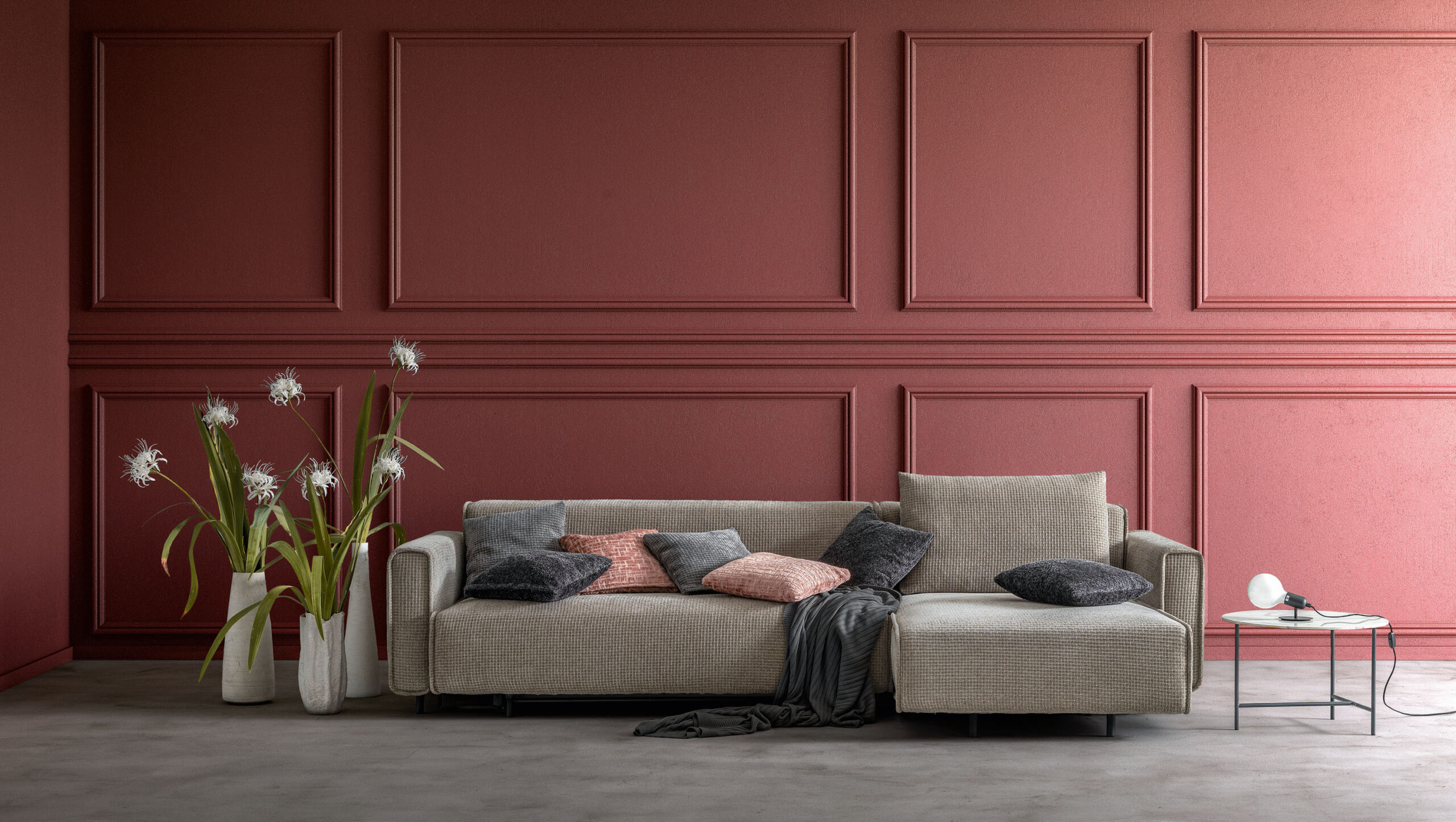
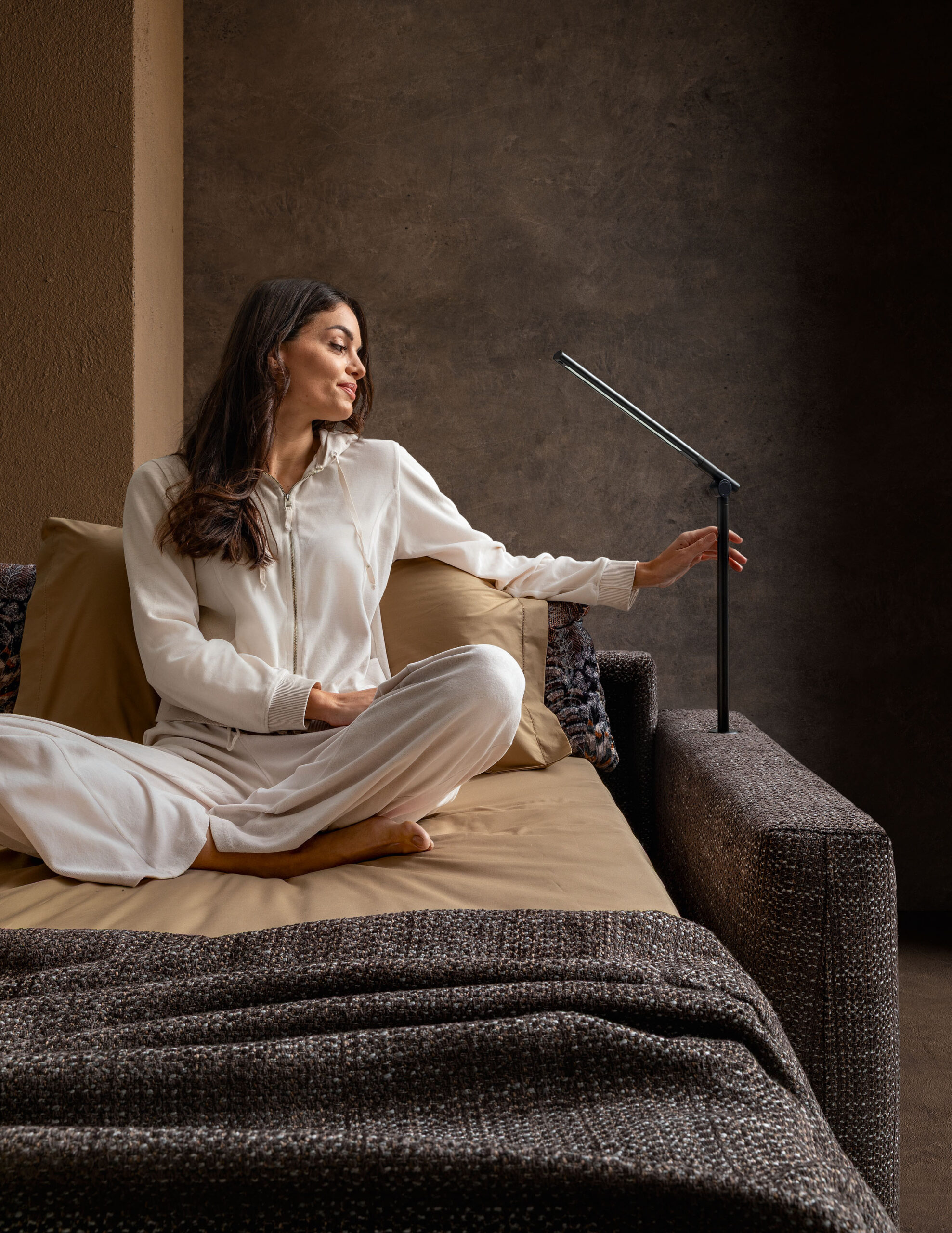
Dance sofa, Metamorfosi collection. Upholstered in Legend fabric, a textured weave with a knotted, raw-look effect.
What are pilling and the Martindale test?
Two of the most frequently mentioned, yet often least understood, terms relate to fabric durability.
The Martindale test measures a fabric’s resistance to abrasion. A machine subjects a fabric sample to repeated rubbing motions that simulate wear caused by everyday use. The result is expressed as a number of cycles. A higher Martindale value indicates greater abrasion resistance, but it does not necessarily mean that a fabric with a lower rating is less suitable or lower performing. The figure should always be interpreted in relation to the intended use of the product and the overall characteristics of the fabric.
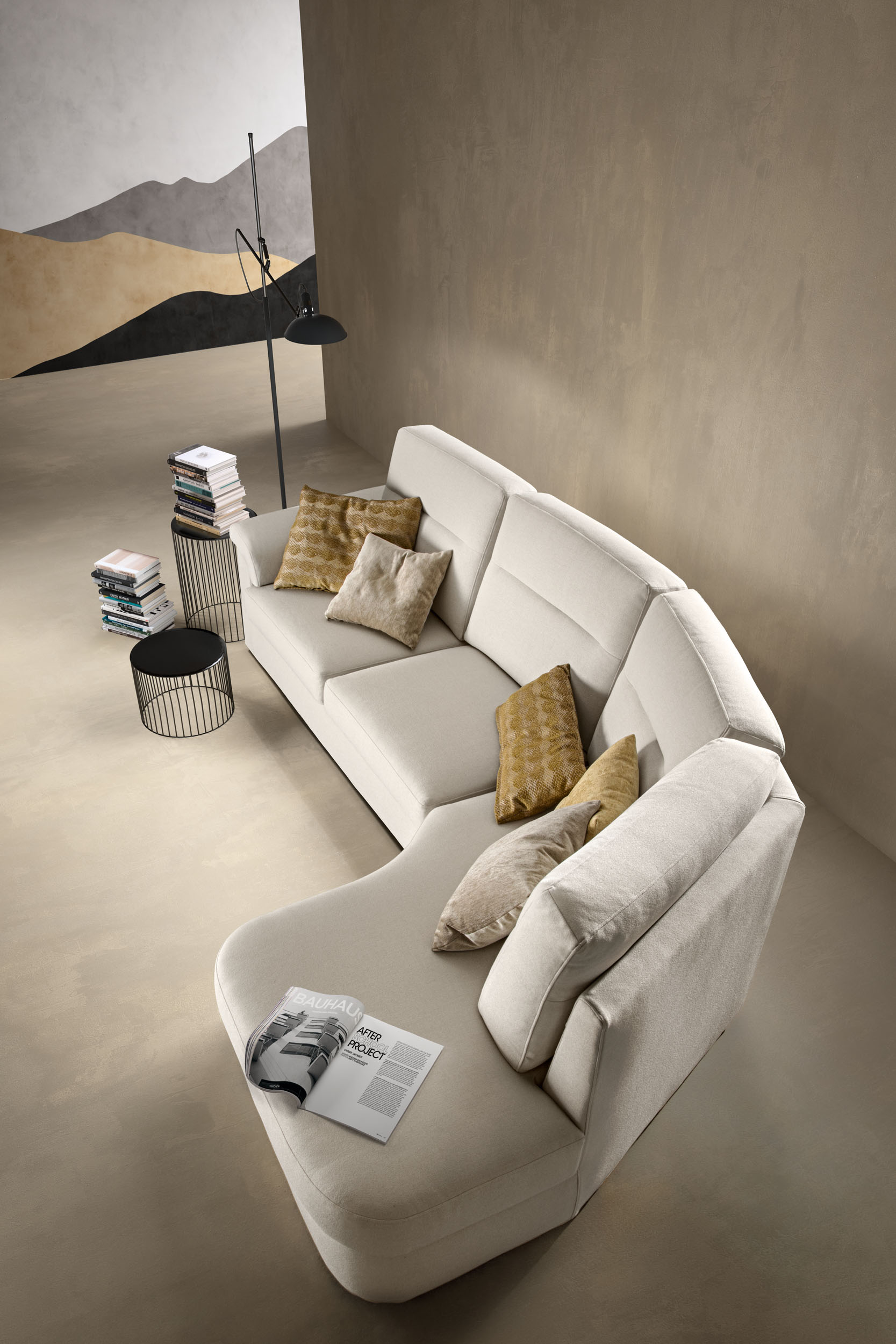
Skill sofa, Essential collection. Upholstered in Joint fabric, featuring a raw-textured appearance and a Martindale rating exceeding 60,000 cycles.
Pilling is the phenomenon whereby fibres subjected to friction become entangled, forming small balls of fibre on the fabric surface. It typically occurs in areas exposed to greater wear, such as seats and armrests. Its appearance depends on several factors, including the composition and construction of the fabric, as well as usage conditions. Anti-pilling finishes can help reduce the formation of these fibre balls, although they cannot eliminate the phenomenon entirely. It is also worth noting that what appears to be pilling does not always originate from the upholstery itself. Fibres and lint released by blankets, clothing or other textiles can settle on the surface and form pills that may differ in colour from the fabric.
The performance features that matter every day
Many of the terms found in fabric specifications do not describe how a fabric looks, but rather how it performs in everyday life.
- Stain-resistant: this refers to a fabric characteristic that helps limit the penetration and absorption of substances that could stain the surface, making them easier to remove. This feature is particularly useful for everyday use, as in the case of Planeta and Maracaibo fabrics from the Easy Care range.
- Water-repellent: this indicates the ability of a fabric surface to repel liquids, slowing down penetration and making accidental spills easier to clean up. This is, for example, one of the characteristics of Nuvole fabric from the Easy Care range.
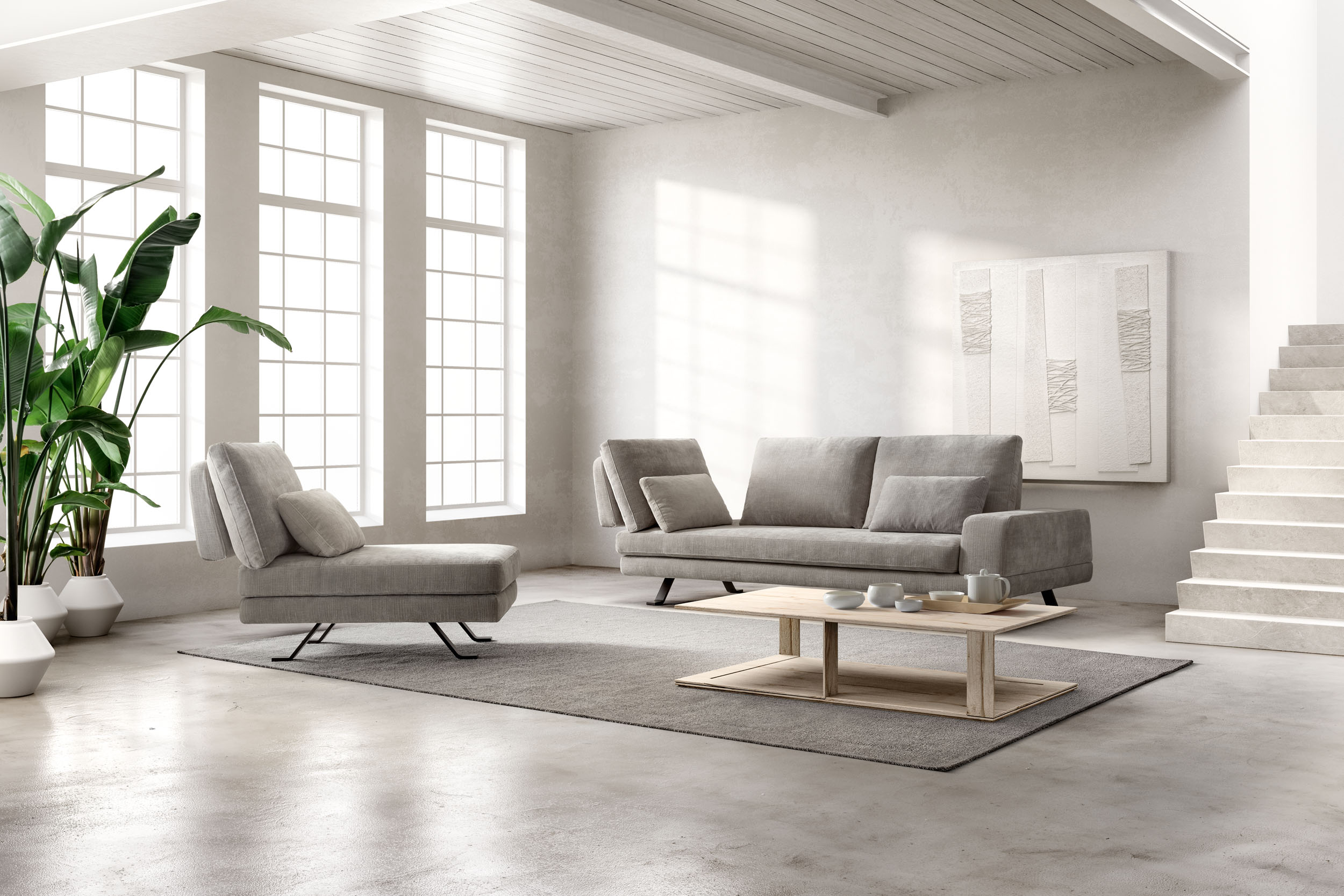
Sound Tidy sofa, Divine collection. Upholstered in water-repellent Nuvole fabric, featuring a solid-colour linen-look texture, a soft touch and Easy Care performance.
- Flame-retardant: this refers to a fabric’s ability to limit flame spread and help slow the development of a fire. Samoa’s Action and Tapas fabrics are certified to IM1 class, the highest level within this classification for upholstery materials.
- Pet-friendly: designed to withstand claws and intensive use, as demonstrated by fabrics such as Zoya and Leo. For a deeper look at this subject, we have created a dedicated guide: The best fabrics for pets.
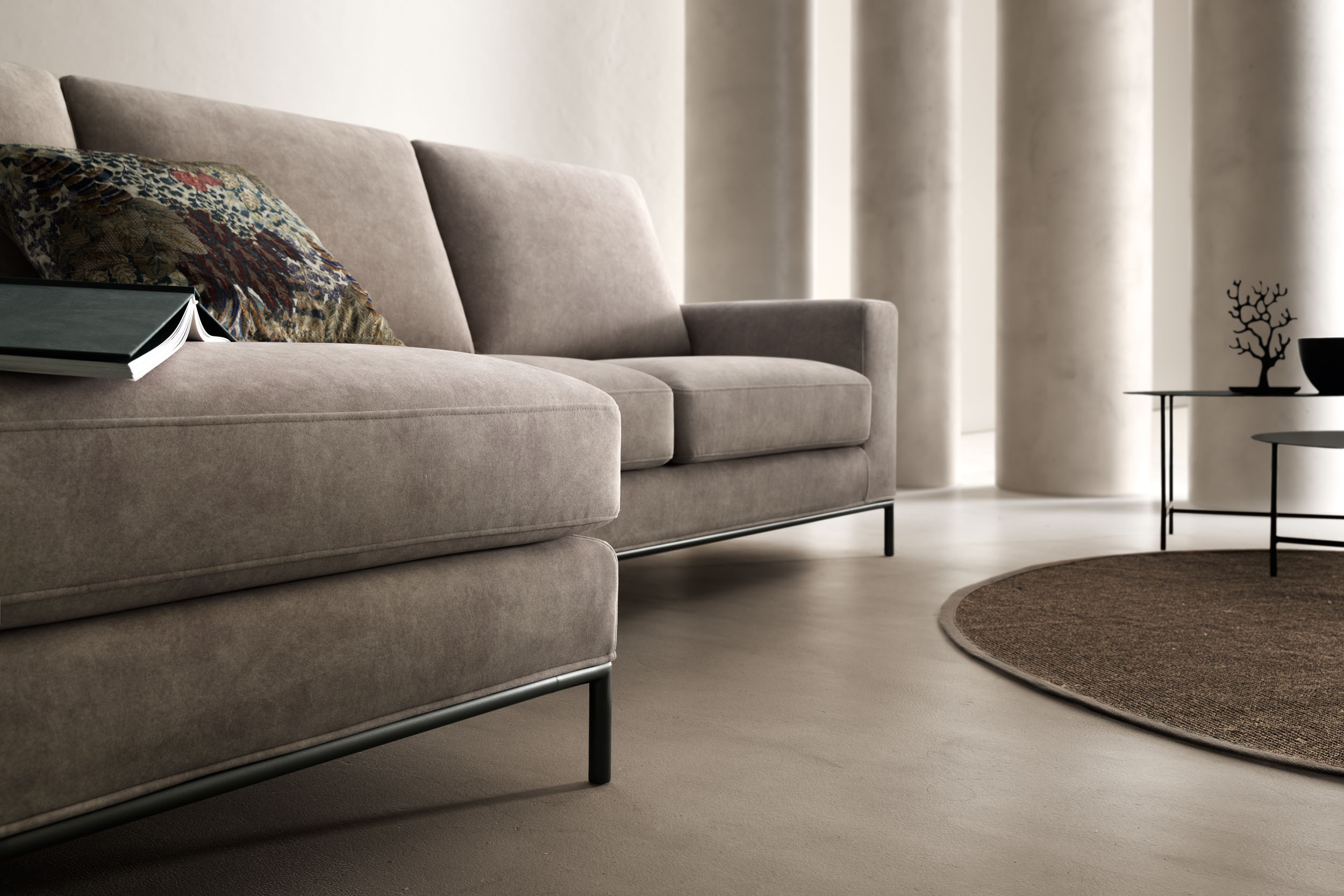
Young Special sofa, Essential collection. Upholstered in Zoya pet-friendly fabric.
- Antimicrobial: a property that helps limit the growth of bacteria on the fabric surface. Within the Samoa range, this feature is associated with stain-resistant treatment. For this reason, Chrome and Blend, from the Health & Wellness collection, combine both characteristics.
- Eco-friendly / recycled: this category includes fabrics developed with sustainability in mind, such as those made from natural or recycled fibres. Examples include Smedo, a 100% brushed cotton fabric, and Legend, made entirely from recycled polyester. Both belong to the Eco & Sustainable range.
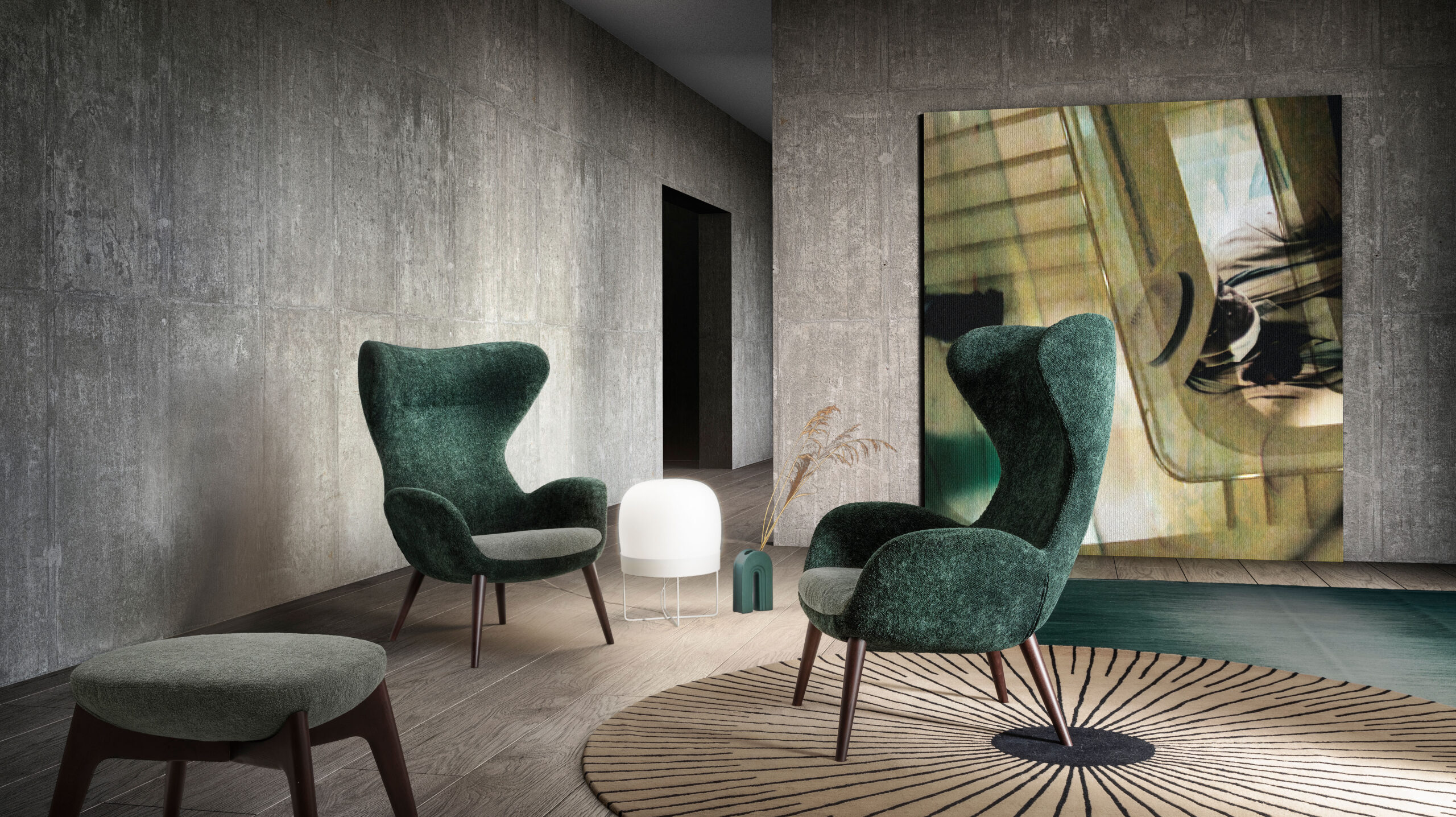
Kim armchair, Bliss collection. Upholstered in Legend fabric, a textured weave with a raw, knotted effect from the Eco & Sustainable range.
It is important to remember that these features do not necessarily overlap. A pet-friendly fabric is not automatically stain-resistant, and vice versa. It is therefore always worth checking exactly which properties are listed in the technical specifications of the fabric you are considering.
The main fabric families
Beyond technical performance, there are several upholstery families that are useful to recognise at a glance:
- Velvet: elegant and rich in texture, velvet reflects light differently depending on the direction of the pile. It requires a little extra attention when cleaning because signs of use tend to be more visible (for more detailed care recommendations, see our guide to proper sofa and bed maintenance).
- Bouclé: recognisable by its looped surface, bouclé offers a soft tactile feel and remains one of the leading interior design trends. Several armchairs from the Bliss collection, including Yoko, use bouclé upholstery to emphasise the model’s sculptural forms.
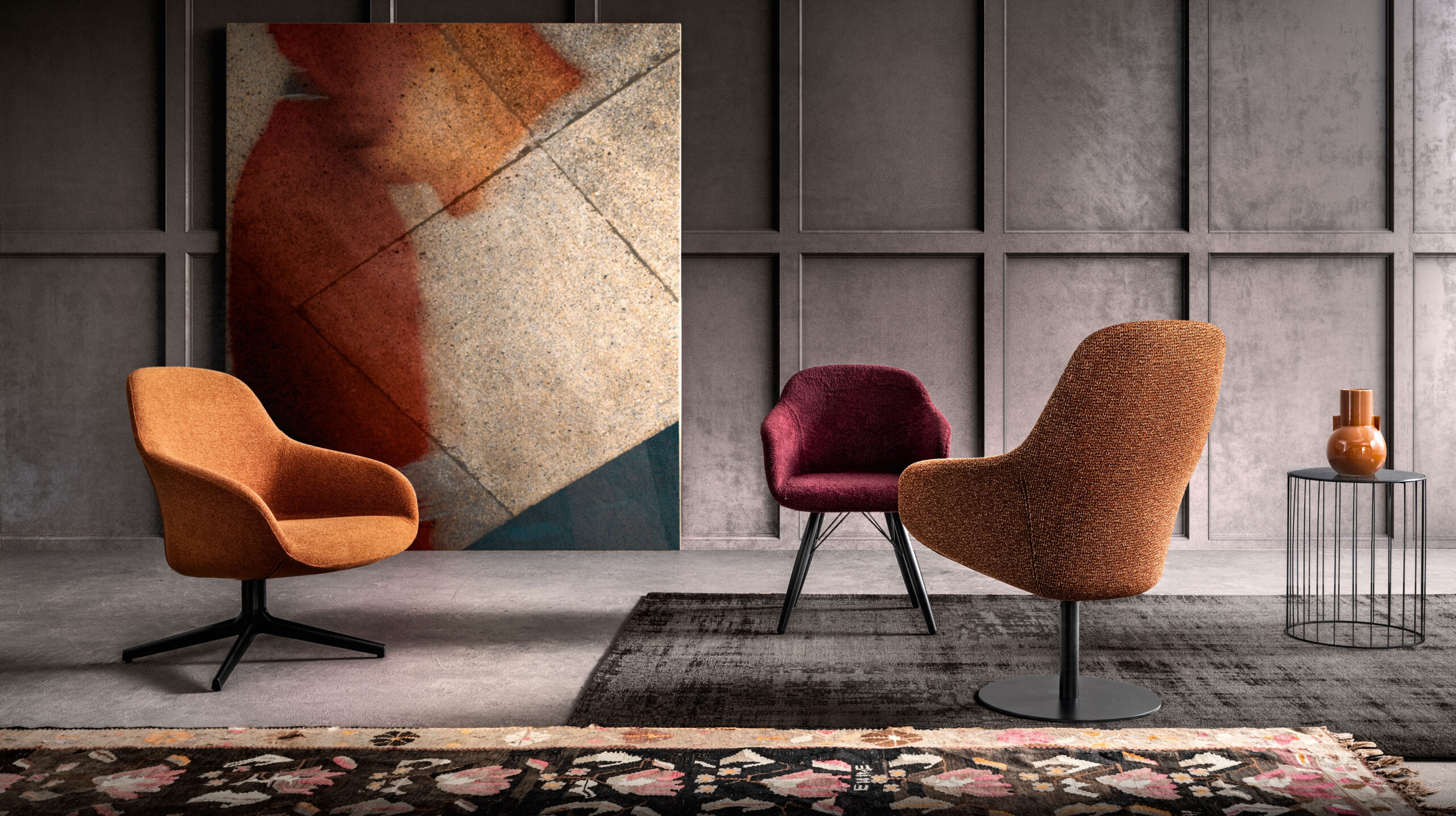
Bliss collection, Yoko model. From left to right: Goethe, a micro-bouclé fabric featuring yarns of different textures; Tudor, a soft teddy-effect fabric; and Rio, a soft-touch mélange fabric.
- Microfibre: a fabric valued for its softness, durability and ease of cleaning, making it particularly suitable for intensive everyday use. One of its distinctive characteristics is the writing effect: running a hand across the surface can slightly alter the direction of the fibres, creating temporary variations in shade and appearance. Our maintenance guide also provides a useful comparison with other upholstery fabrics.
- Chenille: a yarn with a soft, velvety appearance and a luxurious feel, often chosen as much for comfort as for aesthetics.
Understanding leather terminology

Quiet upholstered bed, Bedroom Portrait collection, upholstered in Sirio eco-leather.
Leather has a technical language of its own and understanding it can help when evaluating different options. It is useful to distinguish between two separate aspects: the cut, which refers to the section of the animal hide used, and the surface finish, which refers to the treatment or embossing applied, regardless of the cut selected.
Leather cuts
- Full-grain: the outermost layer of the leather, preserving the natural characteristics of the surface, including pores, grain patterns and minor imperfections. It retains much of the leather’s original structure.
- Split leather: obtained from the inner layer of the animal hide, closer to the flesh side. The surface can then be processed and finished, including through embossing techniques that modify or standardise its appearance.
- Nubuck: created by lightly sanding the surface of full-grain leather, resulting in a soft, velvety finish. Nubuck requires particular attention during maintenance and cleaning.
Surface finishes
- Natural grain: retains the visible grain of the leather, either in its natural state or with subtle refinements achieved through specific finishing processes.
- Uruguay embossing / dollar embossing: embossed patterns applied to the leather surface to create specific textures and visual effects, regardless of the underlying leather cut.
Completing the picture is eco-leather, a synthetic material designed to reproduce the appearance of natural leather while offering its own characteristics in terms of durability, maintenance and ageing behaviour. Unlike genuine leather, it does not require the specialised nourishing treatments associated with natural hides.
The European bovine leathers offered by Samoa are also compliant with REACH requirements, an important consideration when comparing the different upholstery options available in the upholstery catalogue.
Shape sofa, Metamorfosi collection. Upholstered in Arnica fabric, a woven fabric featuring yarns of different thicknesses and colours, with a raw appearance and a soft touch.
The language of textures: a quick dictionary
Many technical specifications use terms that describe the appearance of a fabric rather than its composition. Here is a practical guide grouped by category:
Inspired by natural materials
- Cotton-effect: delivers the natural, matte hand feel associated with cotton.
- Linen-effect: a smooth fabric characterised by the subtle texture variations typical of natural linen.
- Cloud-effect: a surface characterised by soft, cloud-like tonal variations.
- Mélange: yarns of different colours blended together to create a nuanced, variegated effect.
Graphic patterns
- Pied-de-poule: a classic broken-check pattern created by weaving contrasting yarns together. Because the design is woven into the fabric rather than printed, it is as durable as the fabric itself.
- Optical-effect: bold geometric designs featuring strong visual contrasts.
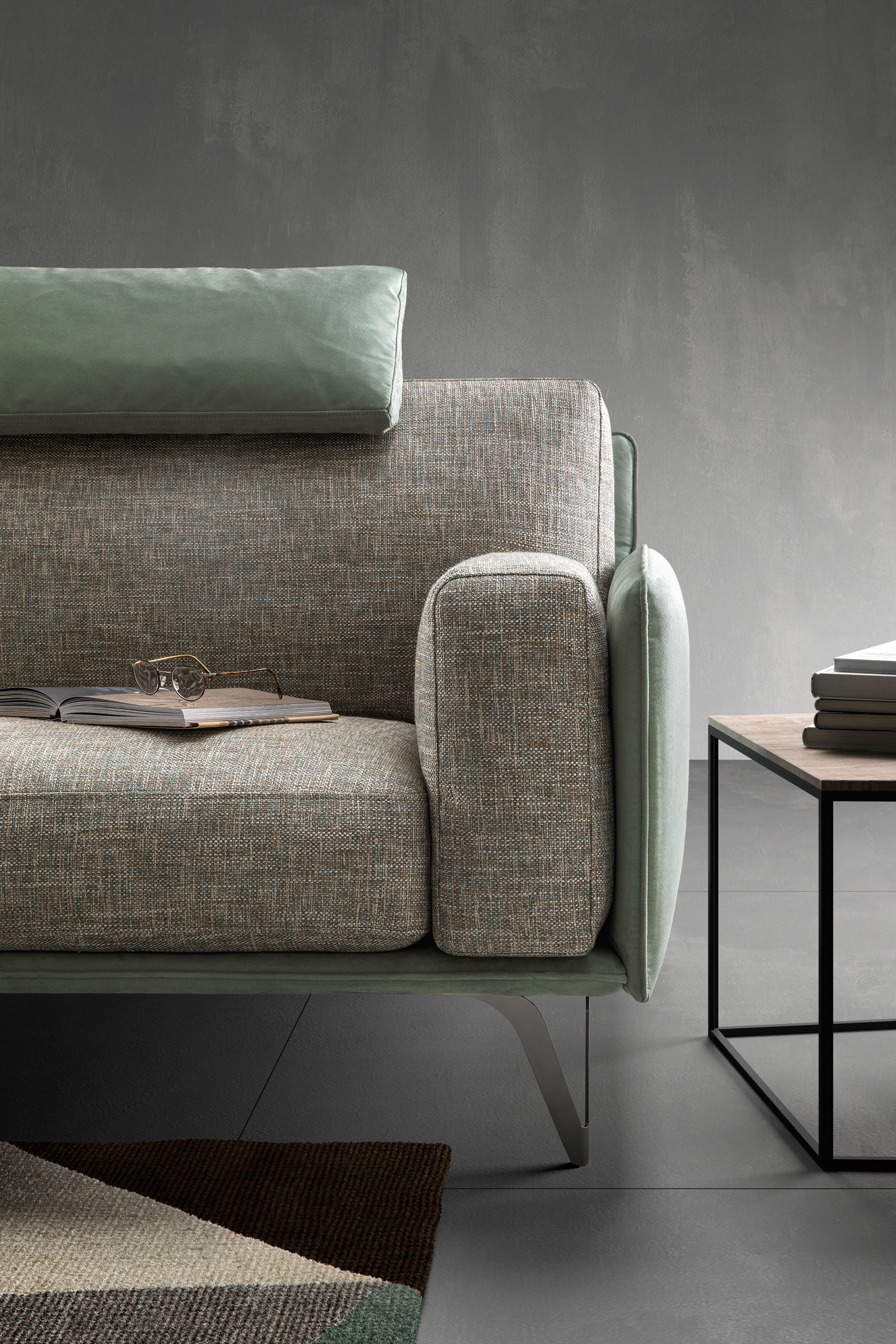
Living Bright sofa, Experience collection. Frame and headrests upholstered in Zanna, a soft-touch writing-effect microfibre; cushions upholstered in Zen, a raw-look mélange fabric made from yarns of different colours.
Surface finishes
- Brushed/sheared: a smooth and compact surface obtained through a specific finishing process.
- Sanded: treated to gently raise the fibres, creating a softer, warmer and more velvety feel.
- Padded effect: a subtly raised and rounded surface that creates a lightly cushioned sensation.
- Knotted effect: irregular knots visible within the weave for a more rustic appearance.
- Slub effect: colour variations along the yarn that create a visually uneven surface.
- Iridescent effect: changes in appearance depending on the angle of light.
- Teddy effect: soft and cozy, inspired by the texture of teddy bear fur.
- Writing fabric: reacts to the movement of a hand across the surface, temporarily displaying visible marks that disappear when brushed again.
Fabric glossary: Samoa answers your questions
Is a very high Martindale rating always the best choice?
Not necessarily. A high number of cycles indicates strong abrasion resistance, but it is only one of many factors to consider. Fabrics should be evaluated as a whole, taking into account composition, hand feel, structure and intended use. The best choice is the one that strikes the right balance between durability, comfort and everyday requirements.
Is natural leather or eco-leather better for homes with children or pets?
It depends on the characteristics of the material and your priorities. Some eco-leathers are designed to simplify everyday cleaning and maintenance, while natural leather can develop even more character over time when properly cared for. If pets are present, resistance to scratching and adherence to the recommended maintenance guidelines should also be considered.
Is a fabric with a decorative pattern such as pied-de-poule or a texture such as bouclé less durable than a plain fabric?
Not necessarily. Aesthetic appearance and technical performance are separate characteristics. Textured or decorative fabrics can still achieve excellent abrasion and pilling resistance. However, the surface structure may influence maintenance requirements and how the fabric responds to everyday use.
Which of these terms really matter when choosing a fabric?
For a sofa intended for everyday use, it is worth focusing first on the technical characteristics most relevant to your needs: abrasion resistance, pilling performance, stain-resistant treatments, removability of the covers and maintenance requirements. Textures, colours and decorative effects then come into play when selecting the style that best suits your interior.
Where can I find all the technical information about Samoa fabrics?
The Samoa upholstery catalogue contains detailed information about the various upholstery options, including composition, maintenance requirements and technical specifications. To see and compare the materials in person, we recommend visiting your nearest authorised Samoa retailer.