
Summer is one of the seasons when your sofa is put to the greatest test. Exposure to sunlight, heat, humidity, sunscreen, sand, and more frequent use can accelerate wear and tear on fabrics, leather, and upholstery fillings.
Knowing how to protect your sofa during summer means preventing fading, stains, and deformation with a few simple daily habits.
In this guide, you’ll discover how to:
- protect your sofa from summer sunlight;
- prevent upholstery from fading;
- remove sunscreen stains correctly;
- care for fabric, leather, and faux leather upholstery;
- keep feather-filled cushions in shape;
- prepare your sofa for heavier use during the summer months.
Protecting your sofa in summer does not mean completely changing your maintenance routine, which we have already covered in our guide to the proper care of sofas and beds. Instead, it means adapting it: recognizing the situations that typically occur during summer and knowing how to manage them according to the upholstery material before signs of wear begin to accumulate.

1. How to protect your sofa from the sun and prevent fading
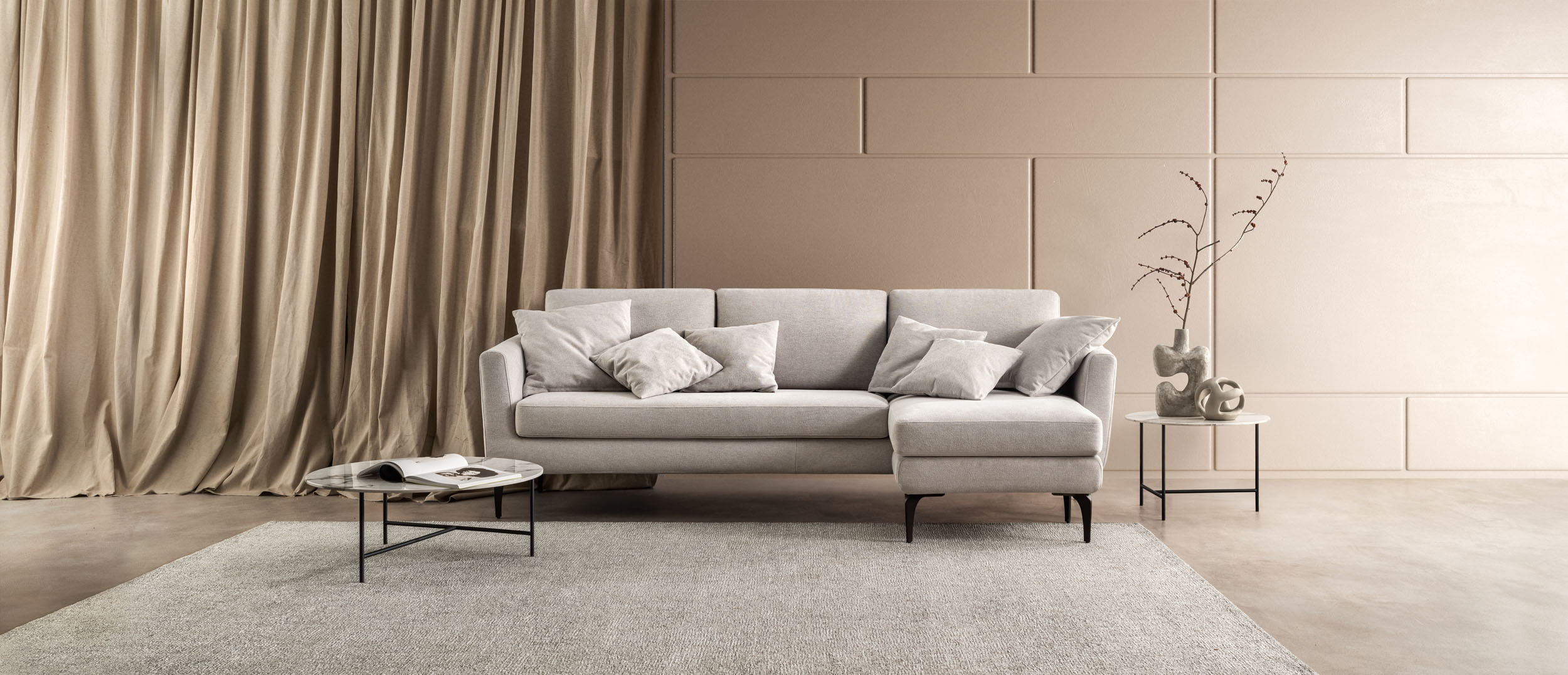
During summer, sunlight enters the home for longer periods and often from different angles than in winter. A sofa that remained in the shade in January may be exposed to direct sunlight for three or four hours a day in July. Over time, UV rays break down fibres and cause colours to fade irreversibly. This happens gradually, often becoming noticeable only when the difference is already quite evident.

In summer, it is important to protect the sofa from potential damage caused by sunlight. Pictured here: Jest sofa, Divine collection.
Practical tips to prevent sun damage
- Observe how the light changes throughout the day in your living space and adjust blinds or curtains accordingly. You do not need to darken the room completely. Even sheer curtains can significantly reduce UV exposure while maintaining a bright and welcoming atmosphere.
- If you move your sofa during the summer, for example to create more space or rearrange furniture, consider sunlight exposure when choosing its new location.
- For natural leather upholstery, prolonged exposure to sunlight can accelerate dehydration. If the surface begins to feel less supple, bring forward your regular leather care treatment rather than waiting for the next scheduled maintenance.
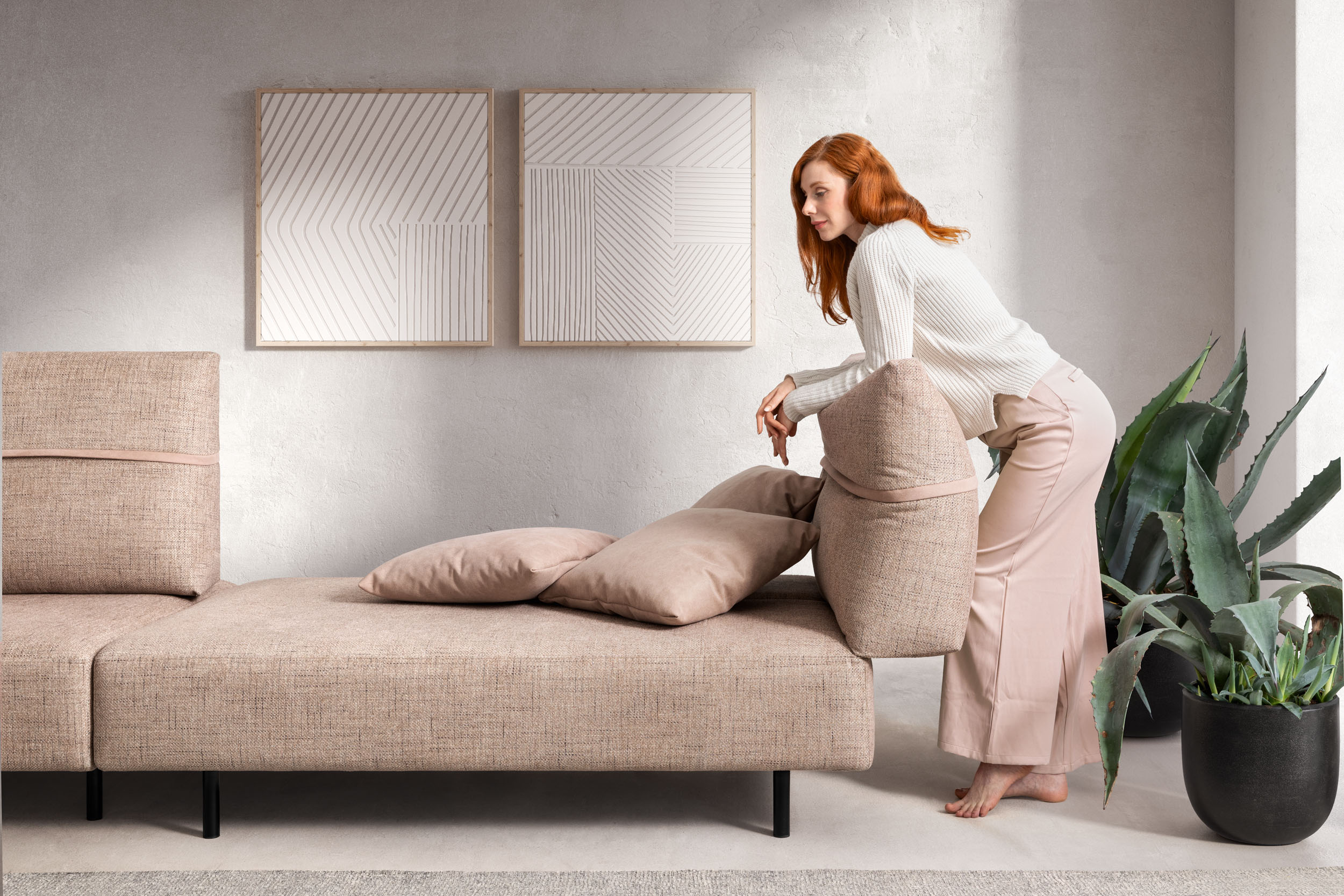
If you move the sofa, consider its exposure to sunlight. Pictured here: Pull sofa, Divine collection.
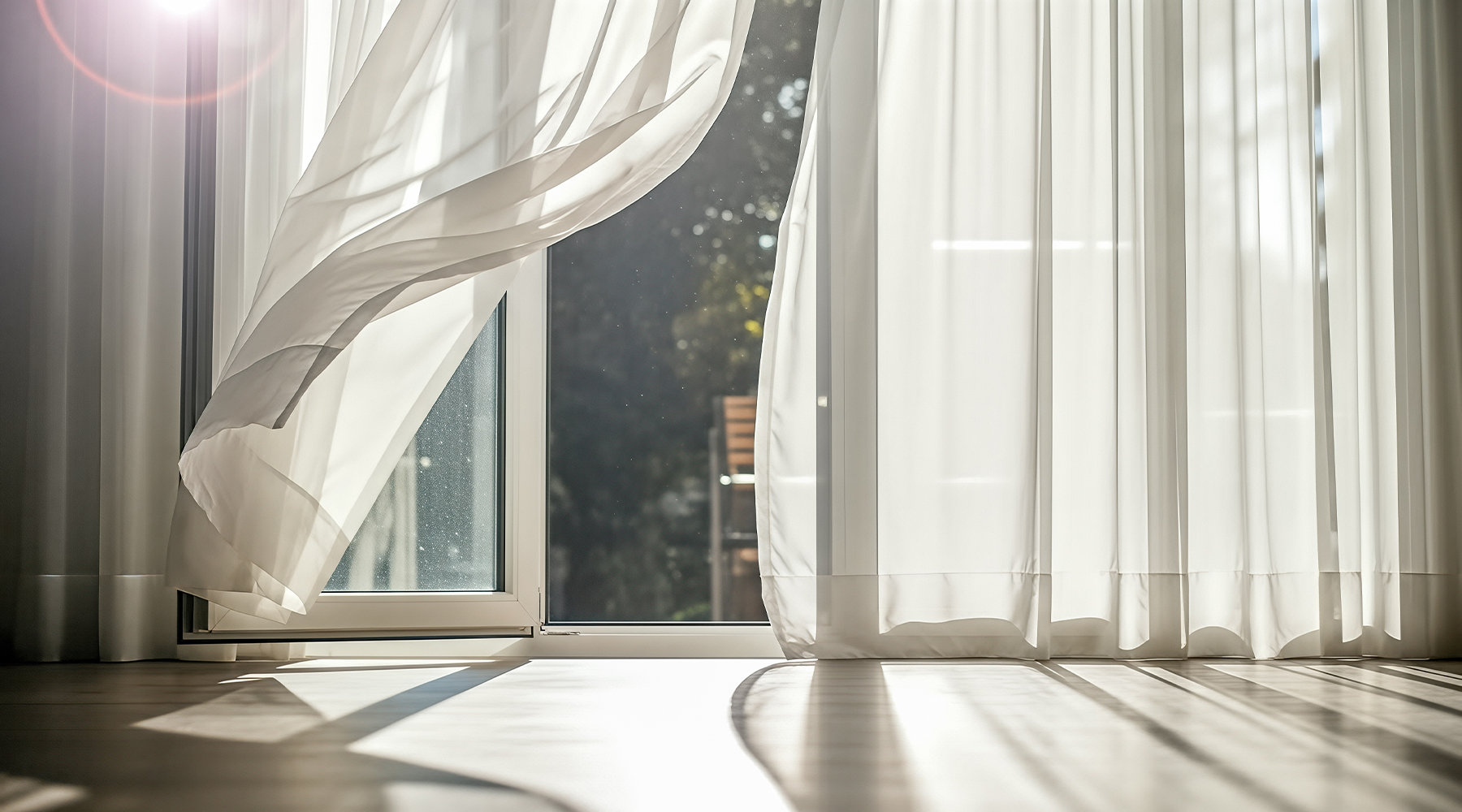
Samoa Easy Care fabrics, such as Planeta and Maracaibo, undergo treatments that help stabilize colour over time. As a result, they offer greater resistance to fading compared to untreated natural fabrics. This is an important aspect to consider when purchasing a sofa, especially for living areas with significant sun exposure.
Crisp sofa, Essential Collection, upholstered in Relax fabric, a covering that is part of the Easy Care and Health & Wellness range.
2. How to remove outdoor dirt and stains from your sofa
Anyone with a garden, terrace, or a home near the sea knows that in summer, the boundary between indoor and outdoor spaces becomes much less defined. Doors and windows stay open longer, and people move in and out of the house more frequently, bringing dust, soil, and other residues indoors that eventually reach the sofa. The most common summer stains vary in nature and therefore require different cleaning approaches.
Practical tips for treating common summer stains:
- Sunscreen and Insect Repellent Stains
These are oily stains containing chemical filters that quickly bond to fibres when exposed to heat, often becoming visible only later. Remove any excess product with a spoon without rubbing. Blot with a dry cloth, then sprinkle baking soda or cornstarch over the stain. Leave it for 15 to 20 minutes and vacuum thoroughly. If a mark remains, use a mild detergent diluted in cold water. For leather and faux leather, a soft, slightly damp cloth is usually sufficient, provided you act immediately. Avoid alcohol-based products, as they may dry out the surface. - Soil, Sand, and Grass Stains
One of the most common mistakes is cleaning these stains immediately with water. Wet soil penetrates deeper into fibres and becomes much harder to remove. Allow the stain to dry completely, then remove the bulk of the residue with a dry cloth or spoon. Vacuum thoroughly and only then blot with a slightly damp cloth and a mild detergent. For sand, vacuuming is often sufficient if carried out before the particles become embedded in the fibres. - Ice Cream and Popsicle Stains
These stains contain sugars and colourants and should be treated using cold water only. Never use hot water, as it can set the sugars into the fabric. Blot gently with a clean cloth, working from the outside of the stain towards the centre. If a mark remains, use a small amount of mild Marseille soap, blot again, and rinse. For leather and faux leather, follow the same procedure and act within a few minutes to avoid colour alterations.
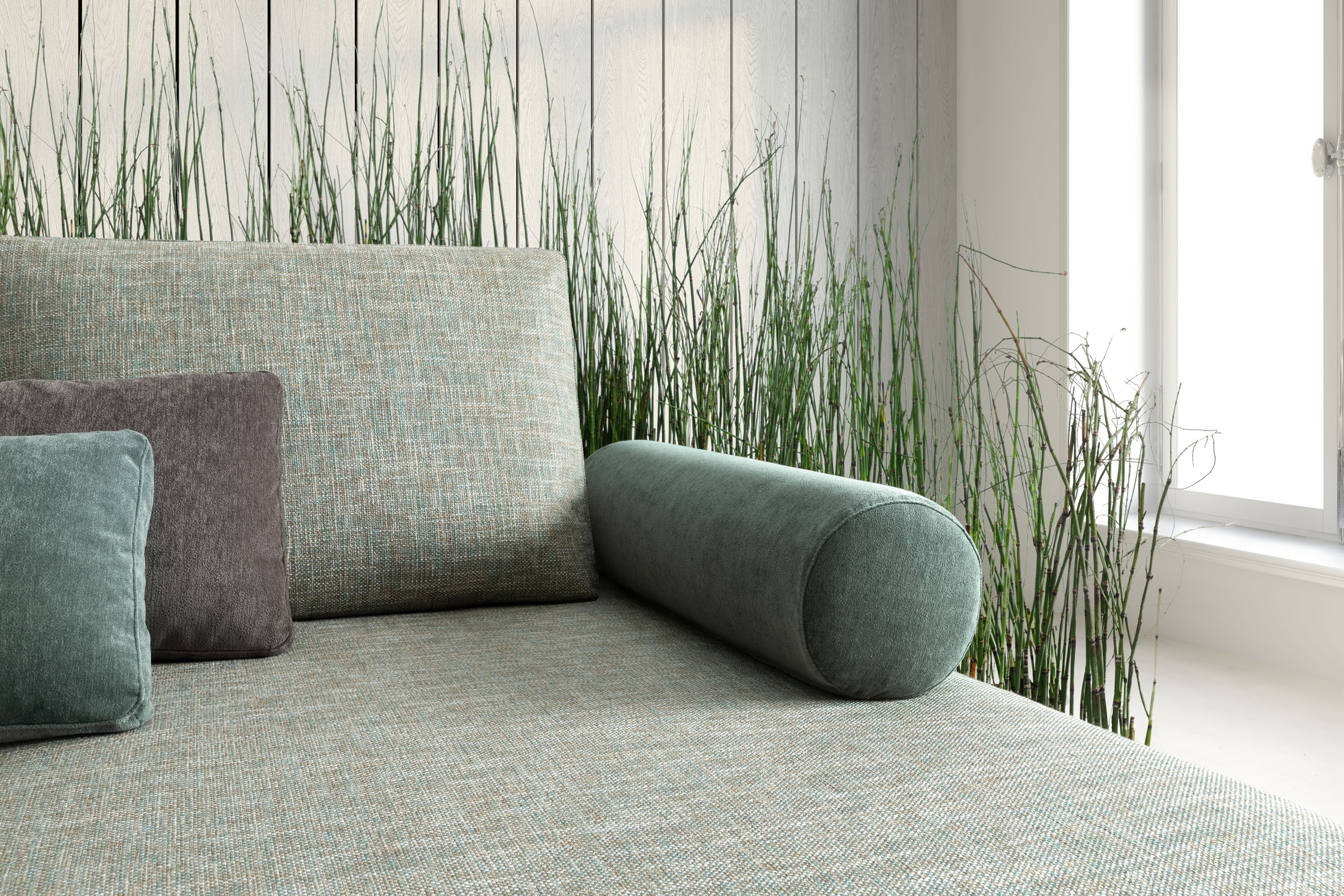
Sound Fly sofa, Divine collection.
3. Caring for fabric, leather, and faux leather sofas during summer
Summer heat and humidity affect different upholstery materials in different ways. Understanding these differences helps you adopt simple habits that make a real difference over time.
Practical care tips for different upholstery types:
- Fabric: fabric absorbs moisture and, if not aired regularly, can retain odours. During summer, it can be beneficial to vacuum slightly more often and air removable cushions regularly, even if only by placing them outside on a balcony for a few hours early in the morning once a week.
- Natural Leather: heat accelerates dehydration. If your sofa receives heavy use or is exposed to direct heat, consider applying a nourishing leather treatment earlier than usual rather than waiting the typical three to six months between treatments.
- Faux Leather: faux leather is generally less breathable, something that becomes more noticeable during hot weather. Although it does not require specific treatments, it benefits from more frequent cleaning with a soft, slightly damp cloth to remove residues that may affect the surface over time.
- Goose Feather Cushions: some Samoa sofas, including Isla and Astor from the Divine Collection and Dafne from the Experience Collection, feature back cushions filled with sterilized goose feathers. Feathers naturally react to humidity by settling towards the bottom of the cushion, making the upper section appear less full. This is not a defect but a normal response to environmental conditions. Simply fluff the cushions daily by holding the two lower corners and shaking them firmly. Periodic airing will also help maintain their ideal shape.
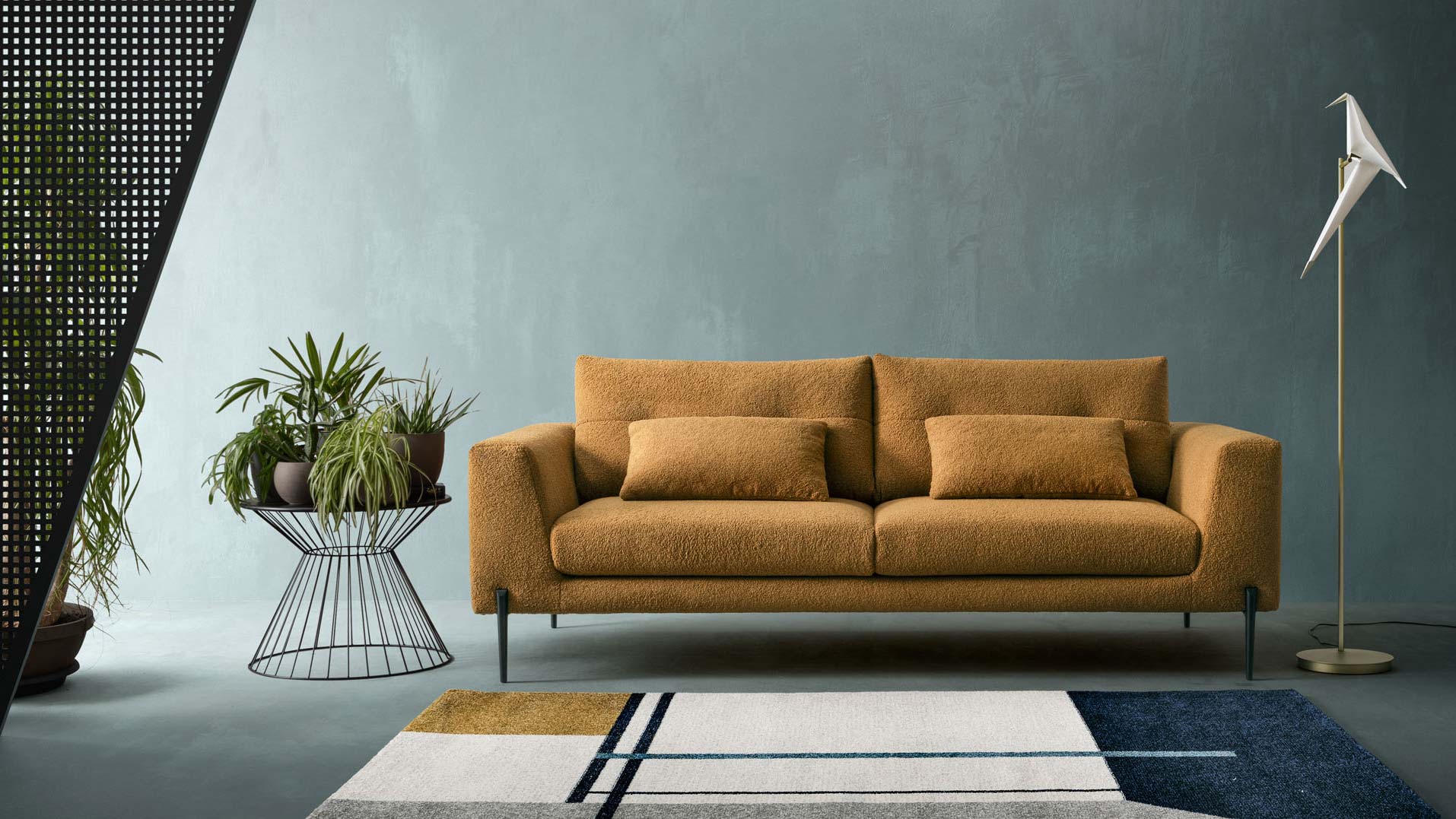
Dafne sofa, Experience Collection, featuring cushions with sterilized goose down and polyester fiber, divided into compartments.
4. Summer guests: preparing your sofa for heavier use
Summer often brings more guests than usual and, with them, greater use of the sofa. Sofa beds may be opened and closed more frequently, cushions are moved around, and seating areas remain occupied for longer periods. Over time, these small stresses can leave their mark.
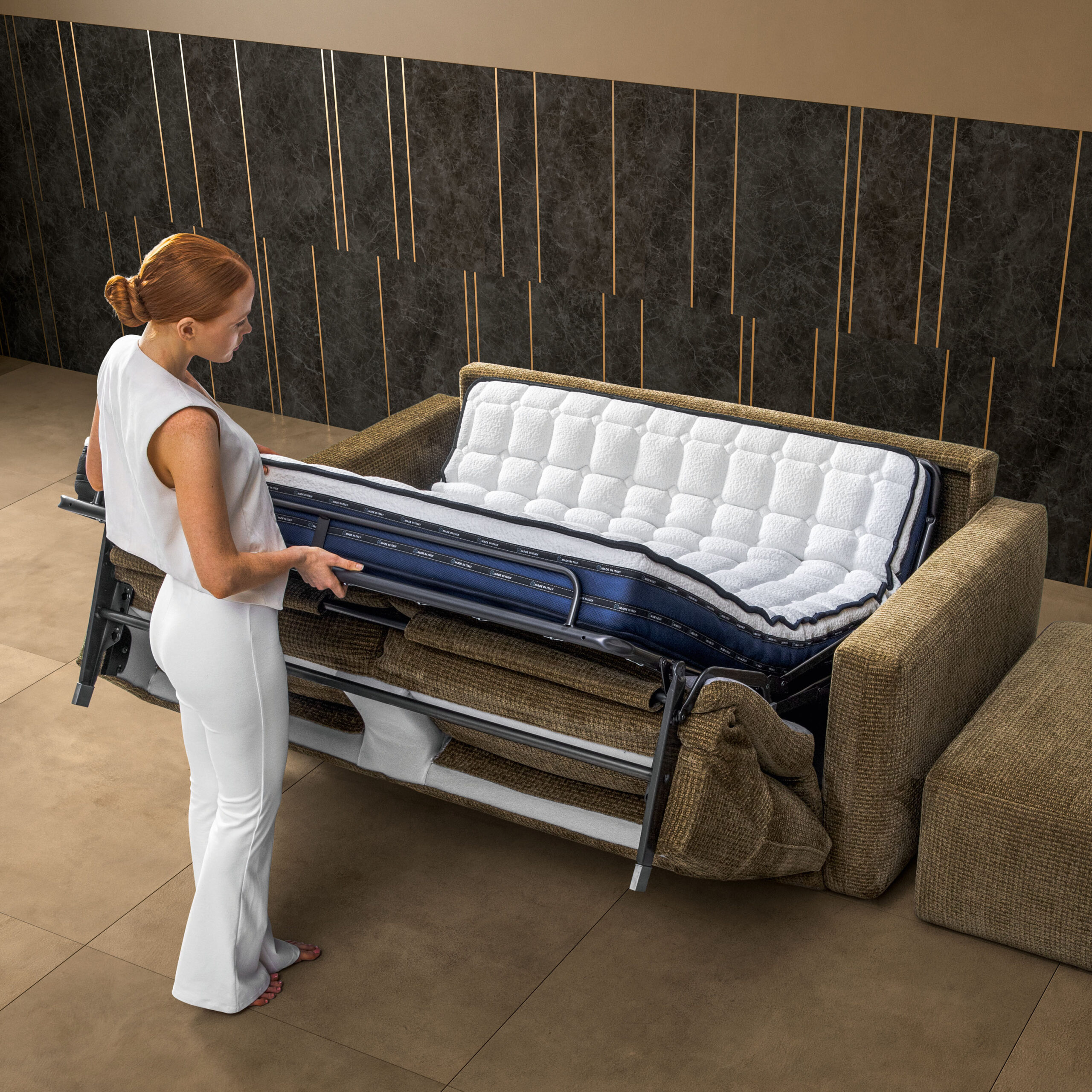
Bart convertible sofa, Metamorfosi Collection.
Practical tips before and after guests arrive:
- Check all mechanisms: if your sofa includes reclining functions, sliding backrests, or pull-out seats, ensure everything operates correctly before guests use them.
- Vacuum all surfaces: pay close attention to edges, seams, and crevices, and check for any stains that may need treatment.
- Air out the mattress: for sofa beds, open the mechanism and allow the internal mattress to breathe.
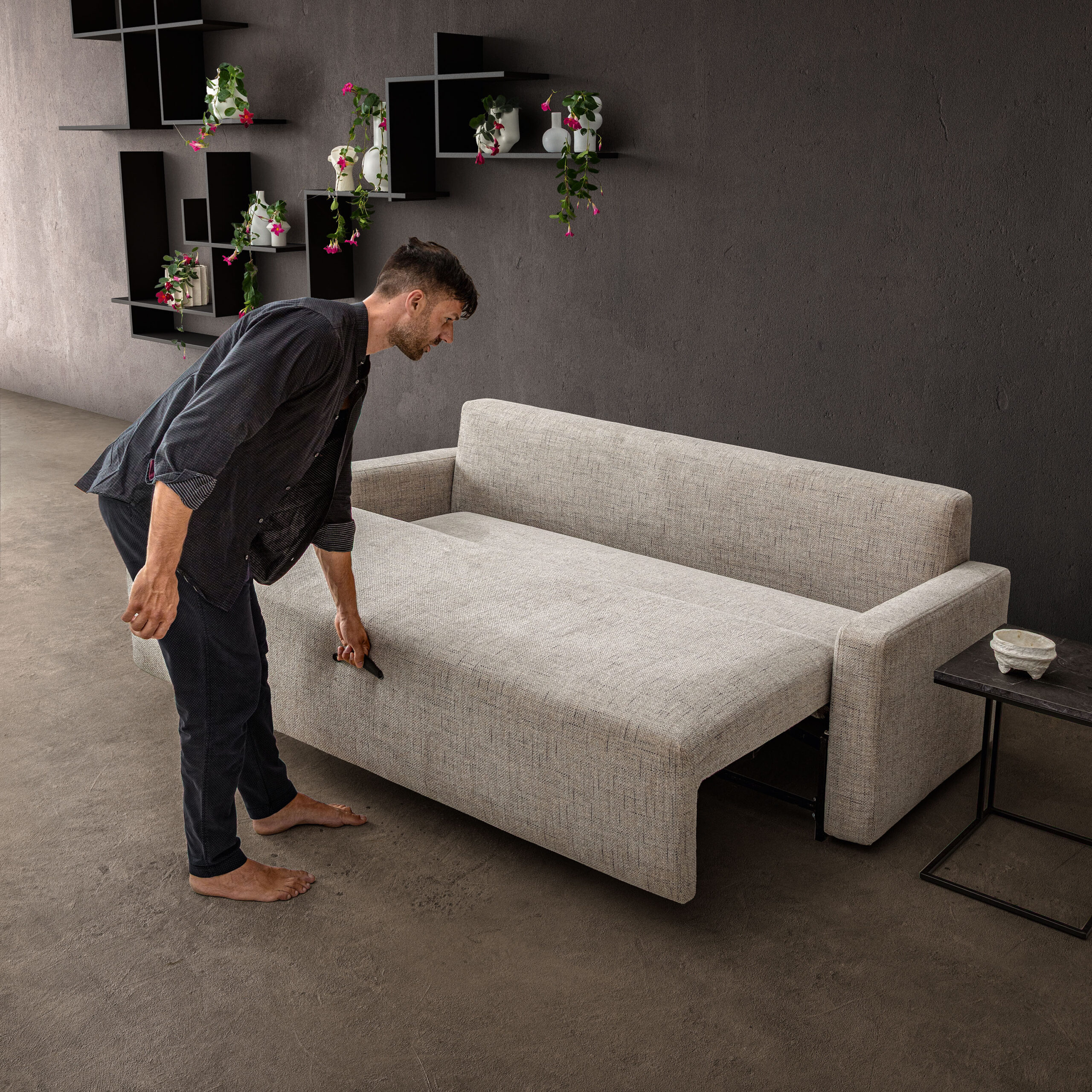
Swift convertible sofa, Metamorfosi Collection.
5. End-of-summer sofa maintenance
September is the ideal time for a more thorough maintenance session before everyday routines return after summer. This is not a deep restoration process but rather a seasonal care ritual that helps restore your sofa to its best condition.
September maintenance checklist:
- Vacuum all surfaces thoroughly, including the spaces between cushions and along edges where dust accumulates during periods of intensive use.
- Check for any remaining stains. Summer stains, especially from sunscreen or soil, can become increasingly difficult to remove over time.
- Wash removable covers according to the fabric care instructions, ensuring zips are closed and Velcro fasteners are secured.
- Nourish natural leather carefully if you have not already done so during the summer or if the sofa has been exposed to extended periods of heat and sunlight.
- Check the condition of all mechanisms, including sliding backrests, Relax systems, and adjustable headrests. If in doubt, your authorized Samoa retailer is the best point of contact.
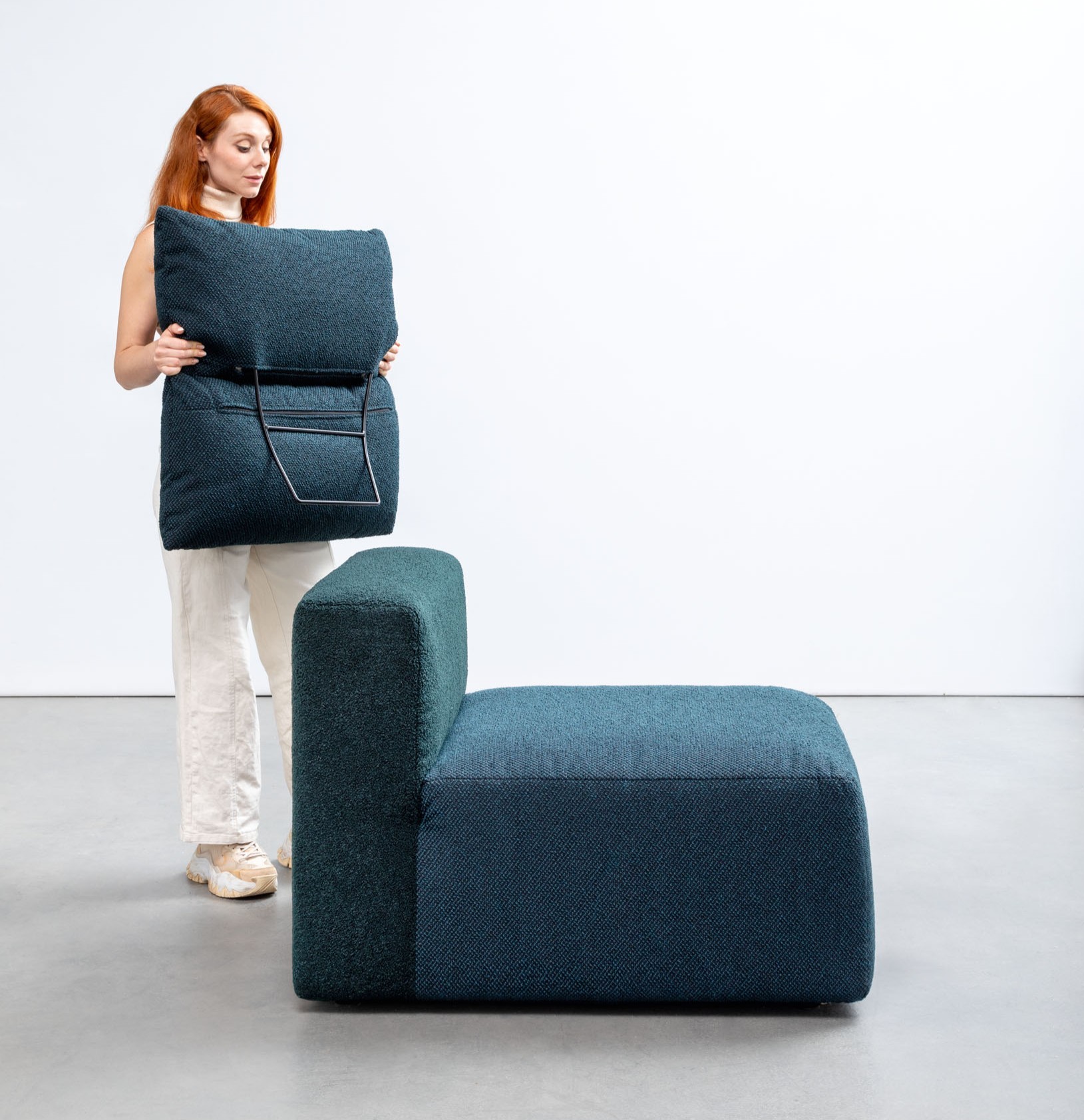
Removable Comfort backrest, Ares sofa, Experience Collection.
Protecting your sofa during summer does not require complicated interventions. In most cases, a few consistent habits are enough: limiting sun exposure, treating stains promptly, airing upholstery regularly, and adapting maintenance to the material. Whether upholstered in fabric, leather, or faux leather, a sofa that receives regular care will retain its comfort, appearance, and functionality for longer. If you are choosing a new sofa or would like to learn more about the characteristics of Samoa upholstery materials, contact your nearest authorized Samoa retailer or browse the complete upholstery catalogue.
How to protect your sofa during summer: Samoa answers your questions
Can Heat Damage Sofa Padding?
High temperatures do not directly damage sofa padding. However, heat, humidity, and more frequent use during summer can temporarily affect the perceived comfort of certain materials, especially natural fillings such as goose feathers. Regularly airing cushions, redistributing the filling when necessary, and following the recommended maintenance guidelines will help keep your sofa in excellent condition.
Where Is the Best Place to Position a Sofa During Summer?
Whenever possible, avoid placing your sofa directly in front of large sun-exposed windows that receive many hours of direct sunlight each day. Proximity to heat sources can also influence the long-term behaviour of certain materials. If rearranging the room is not possible, sheer curtains or solar shading systems can help reduce UV exposure and preserve the upholstery’s appearance and colour.
Can I Use a Steam Cleaner on My Sofa?
It depends on the upholstery type. Steam cleaning is not suitable for all materials and may damage certain fabrics, leather, or faux leather surfaces. Before using a steam cleaner, always consult the upholstery care instructions or contact an authorized Samoa retailer.
Are Samoa Easy Care Fabrics Stain ResistantSamoa Easy Care fabrics are designed to simplify everyday maintenance and make common stains easier to remove. However, they are not waterproof and do not eliminate the need for maintenance. Acting quickly when stains occur and following the recommended cleaning procedures remain the best ways to preserve the upholstery over time.
When Should More Thorough Sofa Maintenance Be Carried Out
A complete maintenance routine is recommended at least once a year, ideally at the end of summer when the sofa has typically been subjected to heavier use. Thoroughly vacuuming all surfaces, washing removable covers according to the manufacturer’s instructions, checking the condition of the cushioning, and ensuring that all mechanisms function correctly will help preserve comfort, aesthetics, and performance for years to come.